Nobody Made This for You: The Death of the Personal Recommendation
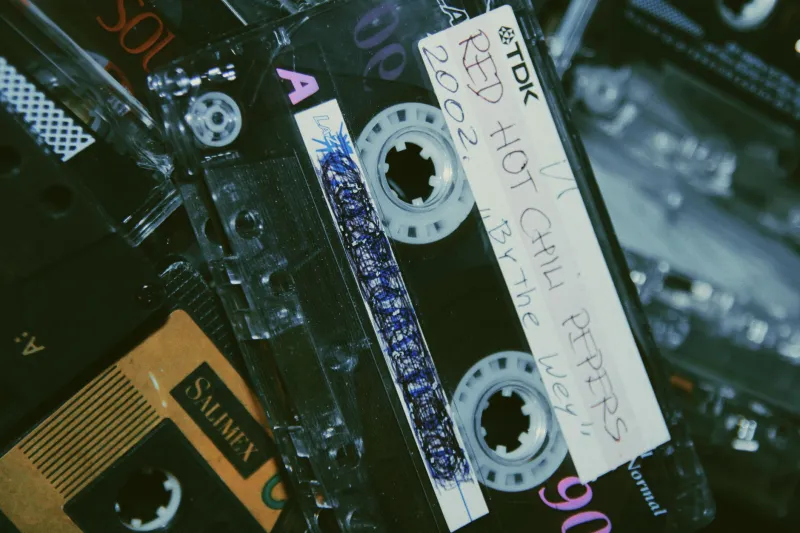
Somewhere in a box in a closet in your parents' house, or maybe in your own apartment if you're the sentimental type, there's probably a CD or a cassette with someone's handwriting on it. A name. A date. Maybe a little heart or a dumb inside joke that doesn't translate anymore. And if you're honest with yourself, you remember exactly who made it for you, exactly what it meant, and exactly what it felt like to press play for the first time.
Spotify can't do that. It never could. And we've spent the better part of a decade pretending otherwise.
The Algorithm Doesn't Know You, It Knows Your Data
Here's the pitch that streaming platforms sold us: we'll learn what you like and serve you more of it, plus a little something new to keep things interesting. Discover Weekly. Daily Mixes. Release Radar. The names alone sound like they were designed by someone who read about human connection in a business school case study. And to be fair, the technology is genuinely impressive. Spotify's recommendation engine processes billions of data points — your skips, your replays, the time of day you listen, how long you let a song run before moving on.
But impressive and meaningful are not the same thing. What the algorithm actually learns is your behavioral pattern, not your soul. It knows you played that one Phoebe Bridgers song fourteen times the week of your breakup. It does not know why. It cannot account for the fact that your college roommate introduced you to her at 2 a.m. in a dorm room that smelled like instant noodles, and that the song is now permanently encoded with that memory, that friendship, that version of yourself. The algorithm optimizes for retention. It is not trying to move you. It is trying to keep you on the app.
That distinction matters more than the industry wants us to notice.
What a Mixtape Actually Was
Let's be honest about what we're mourning here, because nostalgia can make liars of all of us. The mixtape was not just a delivery mechanism for songs. It was an argument. It was a portrait of the person who made it — their taste, their obsessions, the specific emotional logic that connected track seven to track eight in a way that felt like a secret only you were supposed to understand. Making a good one took time, took thought, took a willingness to be seen.
That vulnerability was the whole point. When someone handed you a mix, they were saying: here is how I hear the world. Here is what I think you should hear too. It required them to make a judgment call about you — what you were ready for, what you needed, what you might love that you didn't know existed yet. That's a radically human act. It's the same impulse that drives good criticism, good teaching, good friendship.
The algorithm makes no such judgments. It simply reflects. You like sad indie folk, so here is more sad indie folk, with occasional detours into sad indie folk adjacent to sad indie folk. The feedback loop tightens until your Spotify Wrapped feels less like a revelation and more like a mirror you've been staring into for twelve months straight.
Discovery Without a Guide Is Just Wandering
There's a word the streaming platforms love: discovery. They use it constantly, as if surfacing a band you've never heard of is equivalent to the experience of a friend grabbing your arm and saying, wait, you need to hear this right now, stop everything.
Real discovery has stakes. It happens in relationship. Think about the records that genuinely changed how you heard music — chances are, most of them came through a person. An older sibling. A college radio DJ whose show you stayed up for. A date who made you a playlist and you fell a little bit in love with their taste before you fell in love with them. A coworker who burned you a CD of obscure '70s funk and told you it would change your life, and then it did.
The person doing the recommending is part of the experience. Their authority, earned through years of listening and caring deeply about music, gave the recommendation weight. When your friend said this album is important, you believed them because you knew their taste, respected their judgment, understood the specific frequency on which they operated. Algorithmic suggestions carry none of that freight. They arrive context-free, personality-free, consequence-free.
The Social Life We Traded Away
What's quietly devastating about the streaming era is how thoroughly it privatized what used to be a communal practice. Music discovery once required other people. You went to record stores and talked to the weird guy behind the counter who'd been listening to everything for thirty years and had opinions about all of it. You argued with friends about albums over dinner. You passed headphones back and forth in the backseat of someone's car. You made each other mix CDs for road trips and long-distance moves and first crushes and grief.
All of that social infrastructure — the shared listening, the recommendations, the arguments, the rituals — generated culture. It generated taste, which is a collective thing, built through friction and conversation and exposure to people whose sensibilities weren't identical to yours. Algorithmic curation, by design, removes the friction. And in doing so, it removes the growth.
When your only guide is a system trained on your own past behavior, you're not really discovering anything. You're excavating yourself.
Bring Back the Rec
None of this is to say the technology is evil or that streaming hasn't genuinely democratized access to music in ways that matter. It has. The catalog available to anyone with a phone and a ten-dollar monthly subscription is staggering. That's real, and it's worth saying.
But access without curation isn't abundance — it's noise. And curation without humanity isn't guidance — it's just sorting.
The good news is that the human impulse to share music hasn't gone anywhere. It just needs room to breathe. People are still making playlists for each other, still texting songs with zero context at midnight, still leaving voice memos of themselves singing something they think the other person needs to hear. The gesture survives. It's just fighting for space against a system that would prefer you stay in your own private loop, listening to the same thirty artists in slightly different configurations, forever.
So make the playlist. The handmade one, for a specific person, with a specific logic only the two of you will fully understand. Put something on it they've never heard. Put something on it that reveals more about you than you're entirely comfortable with. That discomfort is the whole point.
The algorithm will never be brave enough to do that for you.