Your Best Friend Is a Brand Now (And So Are You)
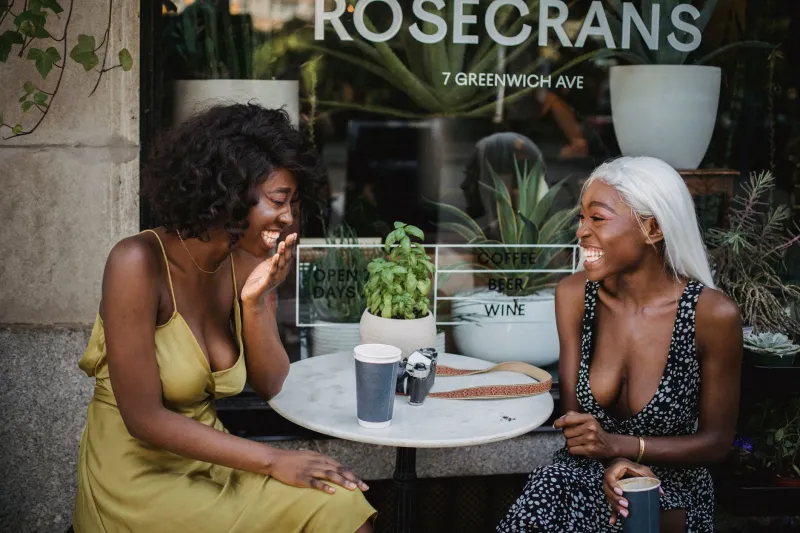
There's a specific kind of loneliness that hits when you're sitting across from someone you've known for fifteen years and you catch yourself wondering whether the moment you're in right now is postable. Not because you're shallow. Because the reflex has become that automatic. The meal arrives, the light is good, your friend laughs at exactly the right angle — and some small, colonized part of your brain is already composing the caption.
This is where we live now. And it's worth asking how we got here, and what exactly we traded away to arrive.
The Public Ledger of Closeness
Friendship used to be, almost by definition, the relationship that happened off the record. The stuff you told your best friend was the stuff that never left the room. The inside jokes, the embarrassing stories, the 2 a.m. phone calls — these were private currencies, meaningful precisely because they circulated only between two people.
Somewhere in the mid-2010s, that changed. Facebook had already nudged us toward performing our social lives, but Instagram finished the job. Suddenly, friendship had an aesthetic. You weren't just close with someone — you were goals. You had a group dynamic. You had a signature hangout spot. You had, whether you chose the word or not, a brand.
The birthday post became a cultural institution so rigid it now functions almost like a legal document. Miss someone's birthday on the grid and you have some explaining to do. Go all out with a carousel of throwbacks and a paragraph about what they mean to you, and you've made a public declaration of closeness that the algorithm will amplify to everyone you both know. The friendship isn't just real — it's verified.
What the Group Chat Actually Is
Let's talk about the group chat for a second, because I think we've been too easy on it.
The group chat was supposed to be the digital equivalent of a standing table at your favorite bar — casual, ongoing, low-stakes. And for a while, it kind of was. But something happened. The group chat got an audience. Not strangers, technically, but an assembled crowd of people who all perform for each other, who screenshot and share, who note who's gone quiet and who's suddenly very active.
The group chat became a stage. And once something becomes a stage, the people in it become performers.
This is how you end up sending a voice memo to your 'close friends' that you've quietly rehearsed. How a funny observation becomes something you sit on for a minute, refining it, before you drop it in the chat for maximum effect. The spontaneity that made those exchanges feel like friendship — the half-baked thought, the genuinely terrible joke — gets quietly edited out in favor of a more curated version of yourself.
You're not texting your friends anymore. You're writing for a room.
The Exhaustion Nobody's Naming
Here's something people don't say enough: performing intimacy is tiring. Not in a dramatic, breakdown kind of way. In a slow, low-grade depletion kind of way. The kind of tired where you cancel plans you actually wanted to keep because the energy required to be a good friend publicly has eaten through whatever you had left for actually connecting.
The birthday post takes time. The thoughtful response to the story takes emotional labor. The 'checking in' DM that's really just maintaining your position in someone's social ecosystem — that takes something too. Multiply it across a friend group of eight or twelve or twenty, and you've got a part-time job that pays in the illusion of closeness.
What's particularly cruel about this arrangement is that it mimics the feeling of connection closely enough to satisfy some of the craving without actually delivering the thing itself. You can spend an entire evening exchanging memes with someone and feel like you've been social, feel like you've maintained the relationship, and still go to bed with that particular hollowness that comes from not having been truly seen by anyone.
The performance ate the relationship. And the relationship's ghost is still walking around, posting, commenting, showing up for the algorithm.
When Did We Sign Up for This?
The tricky part is that nobody agreed to any of this explicitly. There was no moment where we collectively decided that friendship would become content, that our private bonds would be organized into narratives for public consumption. It happened gradually, through a thousand small accommodations to platforms that were built to monetize human connection.
Social media companies didn't set out to hollow out your friendships. They set out to capture your attention and your data, and friendship — real, messy, reciprocal friendship — turned out to be excellent raw material for both. The more you performed your relationships, the more time you spent on the platform. The more time you spent on the platform, the more you needed the platform's validation to feel like the relationships were real.
It's a closed loop, and we're all running it.
The Radical Act of Keeping Something Private
The counter-move, if there is one, is almost embarrassingly simple: stop sharing some of it.
Not all of it. Not in some grand, performative withdrawal from social media that is itself, let's be honest, a form of content. Just — some of it. The birthday dinner that doesn't need a post. The inside joke that stays inside. The friend who knows things about you that your Instagram followers never will, and that's not a failure of intimacy but the whole point of it.
There's something quietly radical about a friendship that leaves no digital footprint. That exists only in the memories of the two people who lived it. That doesn't need an audience to be real.
The parlor — the original one, the room where people actually gathered, actually talked, actually knew each other — wasn't a performance space. It was just a place where the conversation happened. No one was taking notes for the algorithm. No one was optimizing their vulnerability for engagement.
We could use a little more of that. The unrecorded evening. The friend who knows you in the dark. The relationship that doesn't need to be announced because both people already know it's there.
That's the friendship worth having. Even if nobody ever likes it.