Scripted Spontaneity: When Gen Z Practiced Intimacy in Public Before Trying It in Private
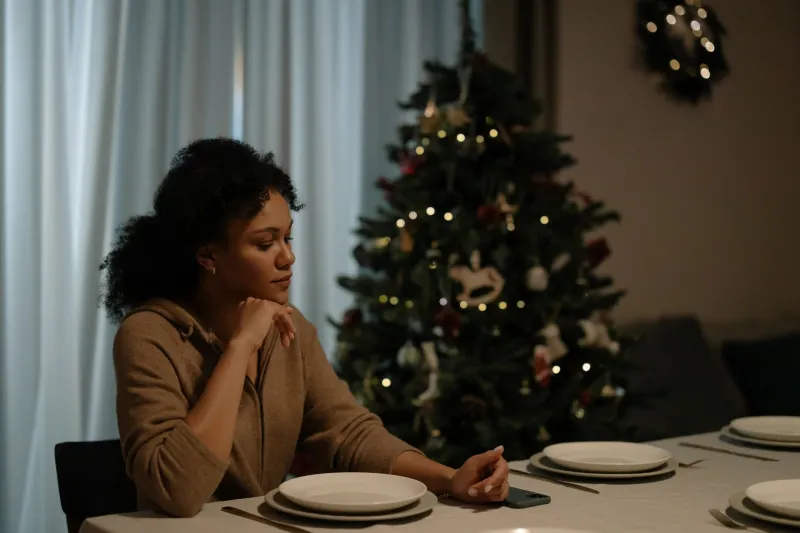
There's a video format that's been quietly dominating the softer corners of TikTok for the past couple of years. Someone sets a table. Lights a candle. Pours two glasses of something — wine, sparkling water, it doesn't really matter. Then they sit down, look directly into the camera, and begin talking to an imaginary guest about something deeply personal. A friendship that fell apart. A parent who never said sorry. The version of themselves they're still trying to outrun.
The comments fill up fast. This felt like a hug. I needed this today. Why am I crying in the Applebee's parking lot.
What's happening in these videos isn't therapy, exactly. It isn't performance art, though it borrows from both. It's something stranger and more specific to this cultural moment: a generation learning how to be emotionally present by practicing in front of millions of strangers before attempting it with a single person they actually know.
The Rehearsal Room That Never Closes
Every generation develops its own emotional vocabulary. Boomers were told to keep it together. Gen X learned ironic detachment as a survival mechanism. Millennials pioneered the public overshare and turned therapy-speak into a second language. But Gen Z has done something structurally different — they've collapsed the boundary between the rehearsal and the performance entirely.
When a 22-year-old spends three hours crafting a TikTok about how to have a difficult conversation with a roommate, complete with dialogue suggestions and nervous-laugh timestamps, something interesting is happening. They're not just documenting an experience. They're constructing a framework for having it. The content comes first. The conversation might come later, informed by the comment section's crowdsourced emotional coaching.
This is the paradox at the center of what we might call the TikTok dinner party: it looks like intimacy, it sounds like intimacy, it generates the emotional resonance of intimacy — but it's happening at scale, to an audience, before the messy private version has even been attempted.
Performing the Feeling to Find It
Here's where it gets genuinely interesting, rather than just vaguely alarming. There's an argument — and it's not a weak one — that this kind of public rehearsal actually works as emotional preparation. Actors have known for centuries that embodying a feeling on stage can teach you something real about that feeling. Therapists use role-play precisely because the artificial version can unlock the authentic response.
When a Gen Z creator films themselves walking through a hard conversation, the act of scripting it, delivering it, watching the playback, and reading the responses might genuinely be building emotional muscle memory. The vulnerability, even when curated, isn't entirely fake. The tears, even when performed for a ring light, often aren't.
But here's the friction point: the version of intimacy that performs well on social media and the version that sustains a real relationship are not the same thing. One is edited. One has good lighting. One ends when you close the app. The other stays at the table after the wine is gone and asks the follow-up question you weren't ready for.
Shareability as a Prerequisite for Experience
There's a subtler problem lurking underneath all of this, and it has to do with the sequence. When you've already processed something publicly — received the validation, absorbed the comments, refined your take — what's left to discover in the private version? Does having an audience for your emotional growth actually accelerate it, or does it consume the raw material before the real work can begin?
Some researchers studying social media behavior have started calling this "narrative foreclosure" — the way telling a story publicly can prematurely close off your own relationship to it. You've already explained what the experience meant. The meaning has been ratified by likes. The chapter feels finished before it's actually been lived.
For a generation that grew up with the camera always available, the impulse to make something shareable before — or instead of — fully experiencing it isn't a character flaw. It's a conditioned reflex. The question isn't whether they're doing it wrong. It's whether the reflex is starting to crowd out something that doesn't translate to video.
The Dinner Party That Isn't One
There's something specifically poignant about the dinner party aesthetic that keeps showing up in these videos. The set table. The implied guest. The performance of hospitality without anyone actually being fed.
The dinner party, as a cultural form, has always been about the controlled staging of spontaneity — you plan the menu, arrange the seating, choose the playlist, and then pretend the whole thing just happened. It's one of the oldest social technologies we have for practicing intimacy in a structured setting. In that sense, the TikTok version isn't as far from the original as it might seem.
But the original dinner party ends with people going home having changed, even slightly, by genuine contact with another person's unedited presence. Someone said something unexpected. Someone got a little too honest about the second bottle in. The intimacy was produced by friction, not framing.
The TikTok dinner party, for all its emotional texture, is missing that friction. The audience is real, but they're also optional. They can be muted. The comment section can be turned off. Nobody at the table is going to say something that genuinely surprises you, because you wrote all the dialogue.
What Gets Lost in the Edit
None of this is an argument that Gen Z is doing something uniquely broken. Every generation has found ways to rehearse emotional experience through mediated forms — novels, music, movies, advice columns. The content has changed. The platform has changed. The scale is genuinely new.
What feels worth sitting with is the specific texture of what gets lost when the rehearsal becomes the main event. The stammering. The wrong word chosen. The long pause where you're both just figuring out what you actually think. The version of yourself that shows up without the caption.
Authentic connection has always been inefficient. It resists editing. It doesn't have a hook in the first three seconds. It sometimes goes nowhere and leaves you more confused than when you started. That's not a bug. That's the whole thing.
The parlor, historically, was where people gathered to actually talk — not to perform the concept of talking, but to sit across from someone and find out what happened when two unscripted people shared the same room. That kind of contact doesn't go viral. It doesn't need to.
But it does require showing up without knowing how it ends. And increasingly, that might be the hardest thing to ask of anyone.