Stuck on Repeat: America's Cultural Imagination Has a '90s Problem
There is a particular kind of exhaustion that comes from watching a culture eat itself. Not in some dramatic, apocalyptic way — more like watching someone order the same meal at a restaurant for the fifteenth consecutive visit while the menu keeps expanding around them. That's roughly where American popular culture finds itself right now: surrounded by infinite possibility, pointing at something from 1994 and saying that one, again, please.
The nostalgia machine has always existed. Every generation looks backward with some degree of longing. But what's happening right now feels categorically different — more compulsive, more pervasive, and, frankly, more anxious. The '90s revival isn't a trend anymore. It's the operating system.
The Revival That Never Ended
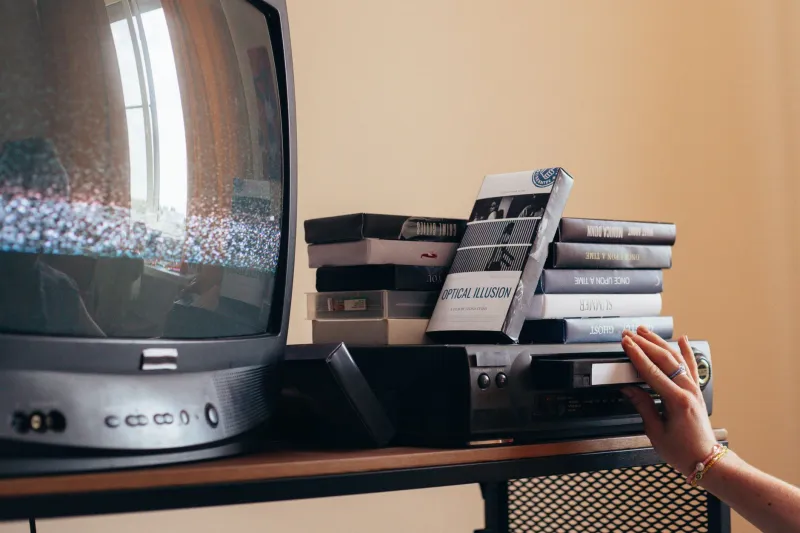
Consider the evidence, and try not to get dizzy. We have Frasier back on Paramount+. We have Party of Five rebooted, Beavis and Butt-Head resurrected, The X-Files repeatedly dragged out of the crypt. Fashion cycles that should take decades to return are now completing in about four years — low-rise jeans, chunky sneakers, and slip dresses have all made their curtain calls. Indie rock is doing its best Pavement impression. Even the aesthetic of lo-fi, slightly grainy photography — the kind that used to just mean your disposable camera was cheap — has become aspirational again, a deliberate artistic choice meant to signal authenticity.
And look, some of this is genuinely delightful. There are aesthetics from that era worth revisiting. The '90s produced real art, real music, real cultural electricity. Nobody is saying the decade was a wasteland. But there's a significant difference between drawing on the past as a resource and treating it as a destination. Right now, a lot of what passes for exciting new culture feels less like inspiration and more like reproduction — a cover band playing to a crowd that's convinced it's watching the original act.
Who's Running the Nostalgia Machine?
Here's where it gets interesting, and a little uncomfortable. The cultural workers most responsible for this endless loop — the showrunners, the A&R executives, the creative directors at fashion houses, the indie filmmakers — are largely millennials and older Gen Xers. People who were teenagers or young adults during the Clinton years, who came of age in a specific cultural climate and apparently cannot stop trying to rebuild it.
That's not an accusation. It's a diagnosis worth sitting with. Because if you were in your formative years during a period of genuine cultural ferment — the explosion of alternative music, the golden age of prestige television's precursors, the first wave of internet culture — and then you spent your adult life watching that world slowly decompose, you might reasonably want to reconstruct it. Grief does strange things to the imagination.
But there's something else underneath the nostalgia, something darker than simple grief. It's the quiet suspicion that we might not be capable of building something new. That the tools, the attention spans, the economic conditions, and the cultural infrastructure required to generate a genuinely original movement simply no longer exist — or if they do, we don't know how to find them.
The Anxiety Underneath the Aesthetic
This is the part nobody really wants to say out loud at the parlor table: nostalgia, at this scale and this intensity, is a symptom of creative anxiety. When an entire cultural class defaults to remixing rather than originating, when the most celebrated new work is celebrated largely for how well it evokes something that already existed, that's not appreciation. That's a tell.
The streaming economy hasn't helped. Platforms built on algorithmic recommendations naturally favor the familiar — they surface what you already know you like, which means the economics of culture increasingly reward recognition over revelation. When Netflix greenlights a show, it is often betting on pre-existing IP, pre-existing audiences, pre-existing emotional investments. The incentive structure punishes the genuinely new because the genuinely new is a risk that spreadsheets don't love.
So the creative class, navigating a market that rewards nostalgia, produces more nostalgia, which trains audiences to expect and desire nostalgia, which makes the market reward it even more. It's a loop. And we've been inside it long enough that a lot of people have stopped noticing the walls.
What Actually New Looks Like — When We Let It Exist
Here's the thing: genuinely original cultural work is still happening. It's just not always where the money and the attention are pointing. You find it in corners — in the queer performance scenes that are building new theatrical languages, in the Afrofuturist literature that is doing something architecturally different with narrative, in the experimental music communities that have zero interest in sounding like anything your older sibling owned on CD. It exists. It's alive. It's just not getting the Pitchfork cover or the Netflix deal, because it doesn't come pre-loaded with the comfort of the familiar.
The tragedy isn't that new culture doesn't exist. It's that we've collectively decided the new stuff requires too much work to encounter and the old stuff feels like coming home. And comfort, in a period of sustained social anxiety, is an incredibly powerful drug.
The Harder Conversation
If we're being honest with ourselves — and that's kind of the whole point of having this conversation — the nostalgia trap is also about fear. Fear that the future is uncertain in ways we cannot aestheticize our way out of. Fear that the cultural confidence of the '90s, the sense that things were moving in some legible direction, is simply gone and not coming back. Fear that building something new means letting go of the last time things felt, however partially and imperfectly, like they made sense.
But here's what gets lost in all that reaching backward: every era that produced something genuinely new did so by trusting the present enough to work with its actual materials. Punk didn't happen because people were nostalgic for skiffle. Hip-hop didn't emerge from people wishing they could remake jazz. The creative moments that changed things happened when artists looked at what was directly in front of them — the technology, the politics, the street-level reality — and made something out of that.
The '90s are not coming back. The flannel is not going to save us. And the sooner American culture stops performing CPR on a decade that lived a full life and died on schedule, the sooner we might actually discover what this moment — strange and difficult and genuinely unprecedented as it is — is capable of producing on its own terms.
That's the conversation worth having. Pull up a chair.