Everyone Is Watching Something Different and the Party Is Over
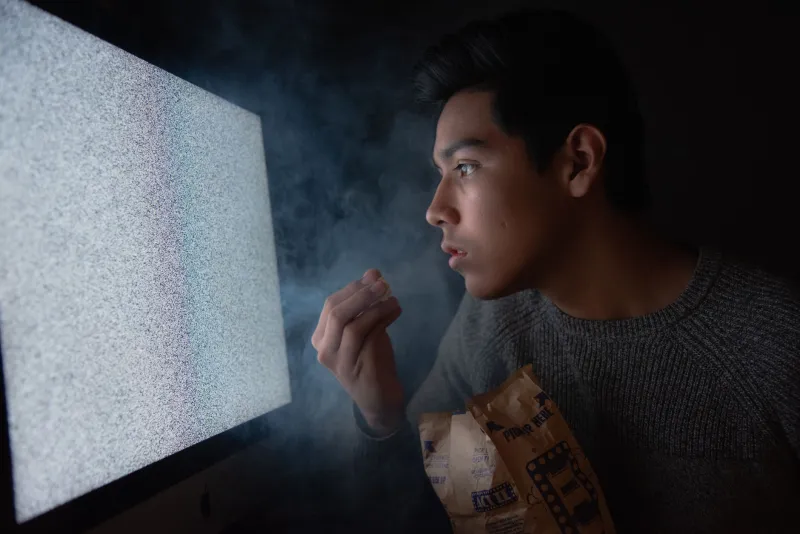
There's a specific kind of social vertigo that hits when you're at a dinner party and someone references a show — breathlessly, the way people used to quote Seinfeld or The Sopranos — and nobody at the table has seen it. Not because it's obscure. Because everyone at that table is deep in their own separate algorithmic rabbit hole, watching something equally brilliant, equally consuming, and completely invisible to everyone else in the room.
This is the strange tax we're paying for the golden age of content. We got everything we ever wanted, and somewhere in the getting, we lost the thing we didn't know we needed: the experience of watching the same thing at the same time and having something to say about it on Monday morning.
The Monoculture Wasn't Perfect, But It Was Ours
Let's be honest about the old world for a second. The broadcast era had gatekeepers who were often exclusionary, risk-averse, and allergic to anything that didn't appeal to the most generic possible demographic. Three networks deciding what 200 million people watched was not, by any measure, a cultural democracy.
But it created something we've quietly undervalued: a shared reference pool. When Roots aired in 1977, roughly 100 million Americans watched it across eight nights. Not because an algorithm decided it was a perfect match for their viewing history. Because it was on, it was important, and the culture demanded you show up. Same with the finale of M*A*S*H, the Challenger coverage, the O.J. verdict, the final episode of Friends. These weren't just television events. They were communal rituals disguised as entertainment.
The algorithm killed the ritual. Not maliciously. It killed it by being too good at something that sounds generous: giving you exactly what you want.
Your Taste Is a Box You Can't See
Here's the part nobody in Silicon Valley likes to talk about. Personalization isn't neutral. Every time Netflix learns that you gravitate toward slow-burn psychological thrillers set in Scandinavia, it narrows the corridor a little more. Every Spotify Discover Weekly playlist that nails your vibe is also quietly confirming you don't need to wander outside it. The recommendation engine isn't broadening your world — it's mapping its borders.
And those borders are invisible, which makes them more insidious than the old gatekeepers, who at least had faces and could be argued with. You can't fight an algorithm's assumptions about you. You can only consume your way through them.
What this produces, culturally, is something like a watercolor effect — thousands of individual taste profiles bleeding into each other at the edges, but never quite mixing into a single coherent image. We're all watching something. We're all listening to something. But the Venn diagram of shared cultural experience keeps shrinking, and the overlap is increasingly just whatever got enough marketing budget to break through anyway.
The Paradox of Infinite Choice
There's a psychological concept called the paradox of choice — the idea that more options don't make us happier, they make us anxious and less satisfied with whatever we pick. Barry Schwartz wrote about it in 2004, and it's aged like fine wine in the streaming era.
Anyone who has spent forty-five minutes scrolling through Netflix only to rewatch The Office for the fifth time understands this in their bones. The abundance isn't freeing. It's paralyzing. And the algorithm's solution — here, let us choose for you — creates a different problem: the gnawing suspicion that you're only seeing a curated slice of what exists, optimized for engagement rather than genuine discovery or surprise.
What we've traded away is the productive friction of a shared cultural conversation. The arguments about whether Tony Soprano deserved what he got. The collective processing of a finale that didn't land the way we hoped. The communal joy of a song being inescapable for one perfect summer. These experiences require everyone to be in roughly the same room, culturally speaking. And we've all wandered off into our own personalized corners.
Why Cultural Moments Feel Like Miracles Now
When something does break through — when Beyoncé drops an album that stops the internet, when The Last of Us becomes the thing everyone's actually talking about, when Taylor Swift turns a football season into a cultural phenomenon — the collective response feels almost disproportionate. People lean into it hard, maybe harder than the thing itself warrants.
That's not hype. That's hunger.
We're starving for the experience of sharing something. The viral moment, the discourse explosion, the meme cycle — these are our clumsy modern attempts to reconstruct the communal ritual that algorithmic personalization dismantled. We're doing it in real time, in public, on platforms that are also algorithmically curated, which is its own kind of irony. The conversation about the cultural moment is itself being filtered and sorted before it reaches you.
The genuine article — the spontaneous, unmediated, everyone-sees-the-same-thing experience — is rare enough now that when it happens, we treat it like a solar eclipse. Something to witness together precisely because it might not happen again for a while.
What We Actually Owe Each Other
This isn't an argument for burning down the streaming services or going back to three channels and a TV Guide. The old monoculture had real victims — people whose stories didn't fit the dominant narrative, whose tastes were systematically ignored, whose existence was treated as niche. Algorithmic personalization has, in genuine and meaningful ways, surfaced art and music and storytelling that would have been buried under the weight of mainstream gatekeeping.
But the solution to an exclusionary monoculture isn't infinite fragmentation. It's something harder to engineer: intentional communal experience. Watching something together not because the algorithm served it up, but because someone you trust said you have to see this and you showed up. Going to the movie theater when the movie doesn't require IMAX. Putting on an album — the whole album — at a dinner party and letting it run.
The parlor, historically, was where people gathered to argue about ideas and share what moved them. It was loud and opinionated and sometimes uncomfortable and occasionally revelatory. The algorithm has given us each our own private parlor, perfectly appointed to our individual tastes.
What it can't give us is the feeling of being in the room together.
That one we have to make ourselves.