Somewhere to Be: The Slow Disappearance of the Places That Used to Hold Us
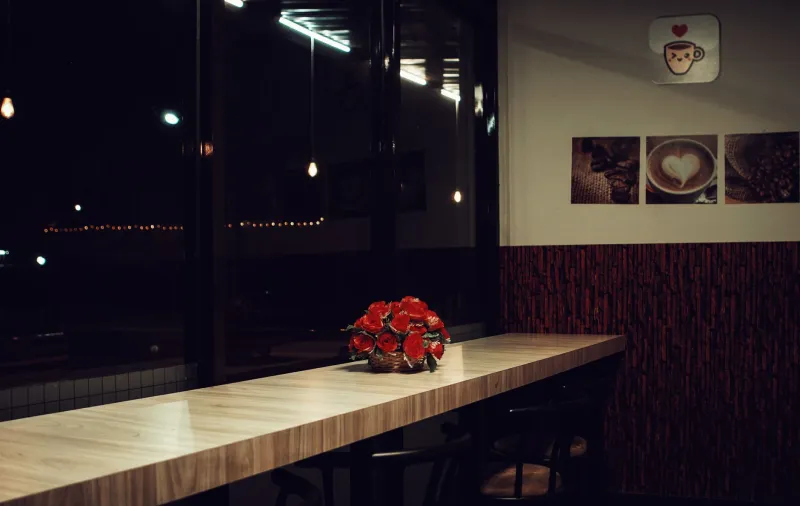
There's a particular kind of grief that doesn't have a name yet. It's the feeling you get when you drive past the spot where your favorite diner used to be, now a smoothie franchise with floor-to-ceiling glass and nowhere to linger. Or when you realize the bar where you celebrated your first real job, argued about movies until last call, and accidentally made three lifelong friends has been converted into luxury micro-units starting at $2,800 a month. You're not mourning a person. You're mourning a place. And in America right now, we are losing them faster than we can process what's actually disappearing.
Sociologist Ray Oldenburg gave us the vocabulary decades ago. He called them "third places" — spaces that were neither home nor workplace, but somewhere in between. The barbershop. The library reading room. The diner counter. The independent bookstore with the cat that lived near the philosophy section. These weren't incidental to community life; according to Oldenburg, they were community life. They were where people from different economic backgrounds and different ZIP codes briefly occupied the same physical reality, where strangers became regulars and regulars became something resembling neighbors.
What we're living through now isn't just a real estate story, though it is definitely also a real estate story.
The Economics of Belonging
Let's be honest about what killed most of these places: rent. In city after city — New York, Chicago, Los Angeles, Austin, Atlanta, Denver — the independent businesses that once anchored neighborhood social life couldn't survive the combination of rising commercial leases, pandemic debt, and the gravitational pull of platforms that made it easier to consume culture from a couch than to seek it out in the world. The numbers are brutal. Indie bookstores have been staging a modest comeback in recent years, but they're still operating at a fraction of their pre-Amazon peak. Local bars and coffee shops close at staggering rates in gentrifying neighborhoods, replaced by chains calibrated for throughput rather than loitering.
And here's the thing about chains: they are architecturally hostile to the kind of slow, aimless socializing that third places depend on. Your neighborhood Starbucks is engineered for transaction efficiency. The lighting is slightly too bright. The music is slightly too loud for conversation. The seating is arranged to maximize turnover, not community. You can technically sit there for hours, but the space itself is quietly discouraging you from doing so. This is not an accident.
When a locally owned coffee shop closes and a chain moves in, the neighborhood doesn't just lose a business. It loses a room where community could happen.
Digital Displacement and the Illusion of Gathering
The obvious counterargument is that we've simply moved our third places online. Discord servers, subreddits, group chats, parasocial communities built around podcasts or Substacks or niche corners of TikTok — these are where people find their people now, the argument goes. And there's something to that. The internet has genuinely allowed people who would have been profoundly isolated in their physical geography — queer kids in small towns, people with rare interests, communities that never had physical infrastructure to begin with — to find connection that would otherwise have been inaccessible.
But let's not confuse availability with equivalence. Online community is real, but it operates on different terms. It is self-selecting in ways that physical spaces are not. When you walked into a neighborhood bar in 1987, you encountered whoever happened to live nearby — different ages, different backgrounds, different politics, different life circumstances. The friction of that encounter, the low-stakes negotiation of shared space with people you didn't choose, was doing social work that we're only now beginning to understand we needed. The algorithm, by design, shows you more of what you already are. The bar, by accident, showed you something else.
There's also the question of the body. Physical presence does something that a video call or a comment thread simply cannot replicate. Shared laughter in a room, the ambient noise of other people's conversations, the particular comfort of being somewhere without having to perform being somewhere — these experiences register differently in the nervous system. We are embodied creatures, and no amount of technological sophistication has yet figured out how to make a screen feel like a room.
What Gathering Actually Requires
Some cities and communities have been experimenting with alternatives, with varying degrees of success. Pop-up markets and temporary community spaces have flourished in certain neighborhoods, offering that third-place energy without the economic burden of a permanent lease. Public libraries — chronically underfunded and perpetually threatened — have quietly become some of the most important third places left in America, particularly for people who can't afford to spend money just to sit somewhere. Community gardens, mutual aid networks, and church basements are doing work that we used to outsource to the private sector without realizing it.
What these alternatives share is intentionality. The old third places worked in part because they required nothing of you — you just showed up and the social infrastructure was already there. The new versions require someone to actively build and maintain them, which means they're more fragile and more dependent on the labor of the people who care most. That's not nothing, but it's also a different kind of thing.
There are also genuinely promising experiments happening at the intersection of physical and digital. Community spaces that host events organized online, neighborhood apps that actually get people out of their apartments and into the same room, local newsletters that function less like media and more like invitations. None of these are the corner bar, but maybe that's okay. Maybe the goal isn't to recreate what existed before, but to understand what those spaces were actually providing and figure out how to provide it differently.
The Grief Is the Point
Here's what I keep coming back to: the fact that so many people feel this loss so acutely tells us something important about what we actually want. We want places that hold us. We want to belong to a room, to a street, to a set of familiar faces who don't require explanation. We want, in the most basic and human sense, somewhere to be.
The death of the third place isn't primarily a story about nostalgia or urban planning or even economics, though it's all of those things. It's a story about what happens to people when the spaces that once absorbed their ordinary social energy simply disappear, and the options left are either the curated performance of online life or the isolation of home.
We're living in that story right now. The question isn't whether we can get the old rooms back — most of them are gone, and the forces that took them aren't reversing. The question is whether we're willing to do the harder, more deliberate work of building new ones. Not just spaces, but the habits and commitments and small acts of showing up that make a space into a place.
Somewhere to be. It turns out that's not a small thing at all.