We Forgot How to Have a Conversation and Nobody Noticed
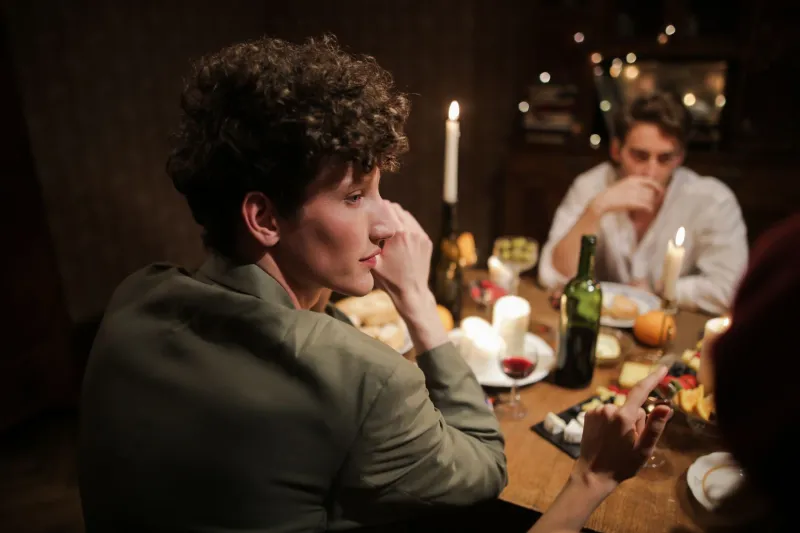
Somewhere between the rise of the algorithmic timeline and the slow death of the RSVP, we lost something genuinely irreplaceable. Not just dinner parties as a social ritual — though yes, those too — but the specific kind of thinking that only happens when you're seated across from another person, mid-bite, suddenly forced to defend a half-formed idea you've been carrying around for weeks.
That friction? That productive, occasionally uncomfortable collision of perspectives? It's basically gone. And we've replaced it with content.
The Table as a Technology
It sounds almost quaint to say it now, but the dinner party was, for a very long time, one of the primary engines of cultural production in America. Not just in the Truman Capote sense — glittering guests, Black and White Balls, that whole world — but at every level of urban social life. The table was where ideas got tested. Where you learned what you actually believed by having to say it out loud to someone who might push back.
James Baldwin hosted. Joan Didion hosted. Your grandmother, probably, hosted. The format was never really about the food.
"There's a reason salons existed for centuries before anyone invented the dinner party as we know it," says Renata Osei, a Brooklyn-based event curator who has spent the last three years running a monthly supper series out of her Bed-Stuy apartment. "People have always understood that physical proximity and shared meals create a specific kind of trust. You can't replicate that on Zoom. You definitely can't replicate it in a comment section."
She's not wrong. And yet here we are.
What the Algorithm Replaced
The collapse didn't happen because people stopped wanting connection. It happened because connection got easier to simulate. The same decade that gave us social media also gave us a thousand low-effort substitutes for genuine intellectual exchange — the hot take, the ratio, the quote-tweet pile-on. All the energy of a real argument, none of the vulnerability.
When you're at a dinner table, you can't log off. You can't mute someone. You have to sit with the discomfort of disagreement, and sometimes that discomfort is where the good stuff lives.
Instead, our feeds serve us back our own opinions, slightly repackaged, endorsed by people we've algorithmically pre-selected to agree with us. It feels like discourse. It produces the neurological rewards of discourse. But it's closer to talking into a very sophisticated mirror.
Dr. Yolanda Ferris, a sociologist at the University of Chicago who studies urban social infrastructure, frames it this way: "We've optimized for comfort and reach at the expense of depth. The dinner party was inefficient by design. You could only invite so many people. The conversation could only go so many places in one evening. That inefficiency was the whole point."
The Hosts Who Refused to Let It Die
Across American cities, a small but determined cohort of people is quietly pushing back. In Chicago's Logan Square, a collective called The Long Table hosts bi-monthly dinners explicitly structured around a single question — no phones, no recording, no performance. In Atlanta, a former magazine editor named Marcus Webb has been running what he calls "argument dinners" for two years: guests are assigned positions on a topic before they arrive and expected to defend them, regardless of personal belief.
"It sounds confrontational," Webb admits, "but what happens is that people get really good at listening. When you know you might have to argue the other side next month, you start actually hearing what the other side is saying."
That's the thing about these revival efforts — they're not nostalgic exercises in mid-century aesthetics. They're genuinely experimental. The people running them understand that you can't just recreate 1962. You have to build something new that serves the same function: a room where ideas have consequences because the people in it are real.
The Performative Trap
Of course, there's a version of the dinner party revival that's just another form of content. The beautifully lit tablescape on Instagram. The guest list as status signal. The conversation as backdrop to the aesthetic.
That's the trap, and the hosts trying to do this seriously are very aware of it. Renata Osei has a no-photography rule at her suppers. Not because she's precious about it, but because the moment someone picks up a phone to document the experience, the experience stops being an experience and becomes a performance.
"People get annoyed at first," she says. "By the end of the night, they always thank me for it."
There's something quietly radical about that insistence on presence. In an attention economy that monetizes every moment of your life, choosing to have an evening that exists only for the people in the room is almost a political act.
Can We Get It Back?
The honest answer is: partially, and only if we're willing to do the work.
The dinner party revival isn't going to scale. It's not supposed to. The whole point is that it's small, and intentional, and a little inconvenient. You have to cook or at least order thoughtfully. You have to curate a guest list with some care. You have to be willing to sit in a conversation that might go somewhere uncomfortable.
But that inconvenience is exactly what makes it valuable. We've spent the better part of a decade optimizing our social lives for frictionlessness, and we've ended up with a culture that's simultaneously more connected and more isolated than any previous generation could have imagined.
The table, it turns out, was never just furniture. It was infrastructure. And we're only now beginning to understand what it cost us to let it go.