The Heartland Is Queer and It's Been Building Something Beautiful Without You
Let's get something out of the way first: this is not a story about survival.
That story — the one where queer life in the American interior is framed entirely through hardship, isolation, and the dream of eventual escape to a city that will finally understand you — is real, and it matters, and it has been told with care by people who lived it. But it is not the only story. And increasingly, it's not even the most interesting one.
Because while coastal media has spent years covering LGBTQ+ Middle America primarily as a crisis to be managed, something else has been quietly happening. People have been building.
What Gets Made When There's No Template
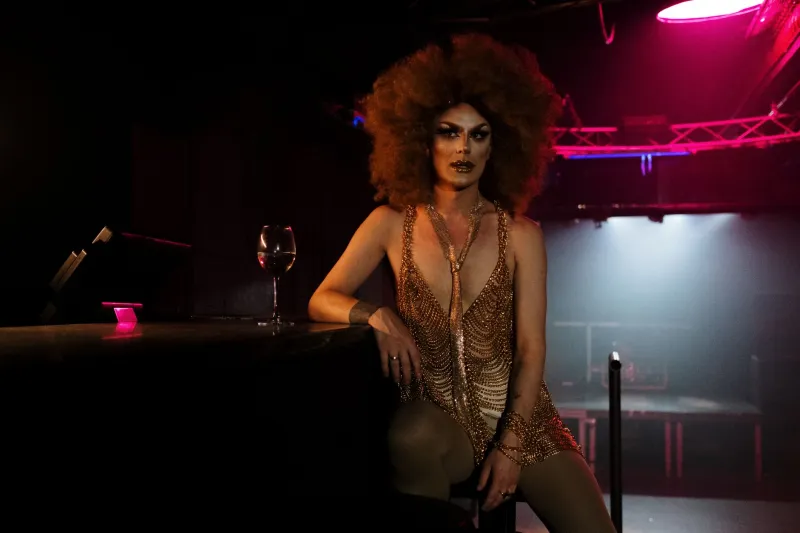
In Nelsonville, Ohio — population around 5,000, tucked into the Hocking Hills region — a drag collective called Holler Queens has been performing at a local bar every other Saturday for going on four years. The shows sell out. The performers are local. The audience is a mix that would surprise anyone who's spent too much time consuming headlines about rural America: farmers, college students, retirees, families with kids, the full cross-section of a small American town that decided, collectively, that this was worth showing up for.
"People always ask me if it's hard to do drag here," says performer and Holler Queens co-founder Jessie Parrott, who grew up twenty minutes outside of Nelsonville. "I tell them it's hard to do drag anywhere. The difference is that here, when the community shows up for you, it's personal. These people know your name. They knew you before the lashes."
That intimacy — the specific texture of being known in a small place — is doing something to the work that's genuinely difficult to manufacture in a city where your audience is perpetually rotating.
Theater That Actually Risks Something
Four hours west of Nelsonville, in Wichita, Kansas, the Prism Theater Collective has spent three seasons producing original work by trans and nonbinary playwrights, staging productions in a converted warehouse on the near-north side of the city. Their 2023 production of Cartography, an original piece about three generations of a Midwestern family navigating gender across decades, drew audiences from across the state and earned a write-up in American Theatre magazine.
Collective director Tomás Vega is matter-of-fact about what they're doing and why it matters. "There's this assumption that serious queer art gets made on the coasts and then, eventually, maybe, it filters out here. We're not waiting for that anymore. We never were, really. We just got tired of being invisible about it."
The work Prism produces is not didactic. It's not designed to educate a skeptical straight audience about the validity of trans existence. It's designed to be great theater, full stop — and the trans experience is the lens, not the lesson.
That distinction is everything.
Mississippi and the Art of Making Space
If Wichita challenges assumptions, Jackson, Mississippi, practically obliterates them. The Magnolia Queer Arts Festival, now in its fifth year, brings together visual artists, musicians, filmmakers, and performers from across the Deep South for a week-long celebration that has quietly become one of the most creatively ambitious regional arts events in the country.
Festival co-founder Deja Watkins, a Jackson native and visual artist whose large-scale textile work has shown in New Orleans and Atlanta, is thoughtful about the geography of what they've built. "People think of Mississippi and they think of what we're fighting against. But what we've built here is what we're fighting for. And those are different things. One is reactive, one is generative. We are very deliberately generative."
The festival's programming reflects that ethos. There are no panels about legislative threats. There are gallery openings, live performances, film screenings, late-night DJ sets, and a visual art competition with a cash prize. It is, emphatically, a celebration — which, in its own way, is the most radical possible response to a political climate that would prefer queer people in the South to be either invisible or embattled.
Why the Coasts Should Be Taking Notes
Here's the thing that gets lost in the standard cultural geography of American queerness: cities have money, visibility, and institutional support. They also have a tendency to professionalize and commodify the things that make queer culture vital.
Pride in a major city is, at this point, largely a corporate sponsorship opportunity. The queer bars that once functioned as genuine community anchors have been closing for years — priced out, gentrified away, replaced by something more palatable and considerably less interesting.
What's happening in Nelsonville and Wichita and Jackson doesn't have those resources. It also doesn't have those constraints. What gets built from scratch, by people who genuinely need it, tends to have a structural integrity that's hard to replicate once money and prestige enter the picture.
"We don't have a grant committee telling us what's fundable," says Jessie Parrott. "We have each other. That's not a limitation. That's actually what art is supposed to feel like."
The Culture Is Already Here
American cultural production has always had a geography problem — a tendency to treat New York and Los Angeles as the places where culture originates and everywhere else as the place where it eventually arrives. That model was always incomplete. Right now, it's starting to look actively embarrassing.
The communities being built in the American interior by queer artists, organizers, and performers are not waiting for permission or validation from coastal institutions. They are producing work, building audiences, training the next generation of artists, and — crucially — creating the kind of genuine cultural infrastructure that makes a place worth living in.
That's not a footnote to American cultural life. That is American cultural life.
The only question is whether the rest of us are paying attention.