Vulnerability Is the New Filter: How 'Being Real' Online Became Its Own Kind of Lie
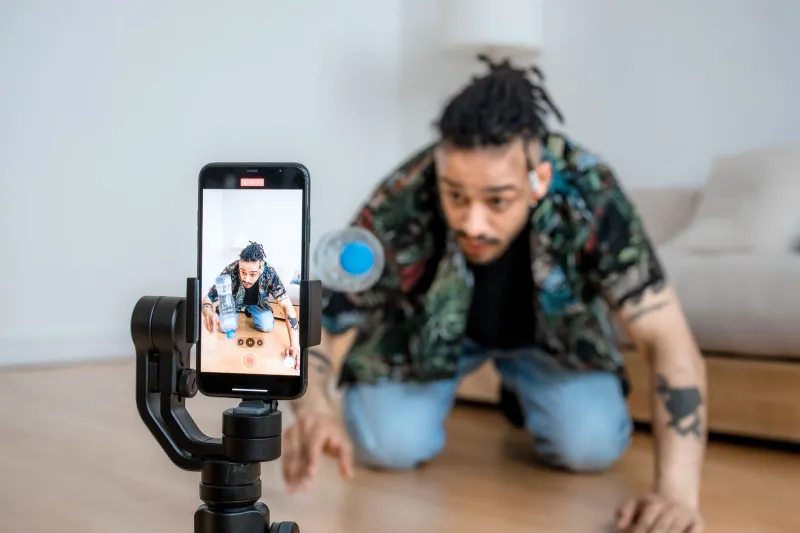
The teary confessional video. The 'raw and unfiltered' morning selfie. The carefully worded caption about 'not being okay.' Somewhere between the rise of the relatability economy and the death of actual privacy, authenticity stopped being something you lived and started being something you posted. And we're all starting to feel it.
There's a particular kind of exhaustion that sets in around the third influencer breakdown you watch in a week. It's not exactly cynicism — or at least, it doesn't start that way. It starts as something more like grief. Because somewhere underneath all the ring-light confessionals and the 'I've been struggling' TikToks, you can sense the ghost of something that used to mean more. Real vulnerability. The kind that happens in kitchens and parking lots and 2 a.m. phone calls, not in front of a camera with a monetizable audience.
The Relatability Industrial Complex
Here's how the machine works: audiences reward creators who seem genuine. Platforms reward content that drives engagement. And nothing drives engagement quite like the appearance of a human being coming undone in real time. So creators — many of them sharp, many of them genuinely talented — learn to package their pain. They learn the cadence of the confessional, the lighting that reads as 'I just cried,' the caption length that signals depth without alienating the casual scroller.
This isn't necessarily malicious. Some of it is survival. The content economy is brutal, and 'authentic' content is simply what converts. But the effect on audiences is cumulative and corrosive. When you watch enough performed vulnerability, you start to lose your ability to recognize the real thing. Worse, you start to lose your appetite for it.
There's a term that's been floating around media criticism circles for a while now: strategic vulnerability. It describes the way public figures — from influencers to politicians to celebrities — deploy personal disclosure as a tool for building trust and loyalty. The disclosure is real enough, technically. But the timing, the framing, the platform choice — all of it is calculated. Which means what looks like openness is actually just a more sophisticated kind of branding.
When the Audience Wises Up
The interesting thing about audiences is that they're not stupid. They adapt. And what we're seeing right now, across comment sections and group chats and the quieter corners of the internet, is a collective recalibration. People are getting tired. Not just of individual creators, but of the whole grammar of performed realness.
You can see it in the way certain types of content get ratio'd now — those long, meandering 'story time' videos where someone builds to an emotional crescendo that somehow always lands on a product recommendation or a Patreon plug. You can see it in the backlash cycles that hit creators who've built their entire brand on being 'honest,' only to be caught in some minor inconsistency that suddenly makes the whole edifice feel hollow.
And you can see it in what's gaining traction instead: creators who are conspicuously not performing emotional availability. Who keep things back. Who maintain a persona that has edges and opacity and the quiet dignity of someone who doesn't owe you their inner life. Restraint, it turns out, is becoming its own kind of radical act.
What Authenticity Actually Costs
Here's the thing nobody in the content economy wants to say out loud: real authenticity is inconvenient. It doesn't have consistent lighting. It doesn't hit at optimal posting times. It doesn't come with a call to action. Real vulnerability is messy and asymmetrical and sometimes it makes people uncomfortable in ways that don't resolve by the end of the video.
Actual human connection — the kind that happens between people who know each other, who have history, who've sat together in silence — doesn't translate to content. It can't be optimized. And that's precisely what makes it valuable.
The influencer confessional model accidentally revealed something important about what we've lost: the sense that some things are meant to be witnessed only by the people who've earned the right to witness them. That there's a difference between sharing and performing. That grief, joy, confusion, and desire are not content categories.
The Audience Is Changing the Game
What's quietly exciting, if you're paying attention, is that the pushback isn't just taking the form of cynicism. It's taking the form of a genuine appetite for something different. People are seeking out smaller, slower, more genuinely reciprocal spaces — newsletters where the writer clearly doesn't care if you subscribe, podcasts with tiny audiences and genuine opinions, local creators who don't optimize for virality because they're not trying to go viral.
There's a growing cultural hunger for the kind of conversation that doesn't perform itself. Where someone says something because they mean it, not because they've A/B tested the emotional hook. Where the moment of connection doesn't immediately get documented and uploaded.
That hunger is, in its own way, a form of cultural health. It suggests that despite everything — despite the algorithms and the engagement metrics and the decade-long normalization of oversharing — people still know the difference between a real moment and a simulated one. They can feel the absence of actual human warmth even when the aesthetic of warmth is flawlessly executed.
Logging Off the Performance
None of this is a call to delete your accounts or abandon the creators you genuinely love. Some of the most interesting cultural commentary happening right now lives on social media, and some creators have figured out how to be genuinely themselves within the constraints of the medium. That's real, and it matters.
But it's worth asking yourself, the next time you feel moved by an influencer's confession: What am I actually responding to here? Is it the person? Or is it the performance of personhood — the familiar shapes of emotion, packaged and delivered at scale?
And then maybe ask the harder question: When's the last time you had a conversation that felt like something neither of you could have scripted? When's the last time you were actually witnessed by someone who had nothing to gain from the experience?
That's the thing the content economy can't give you. And the fact that we keep looking for it there — that we keep mistaking the filter for the face — says more about what we're missing than about anything an influencer has ever posted.