You Used to Hate Your Friend's Taste. That Tension Was the Point.
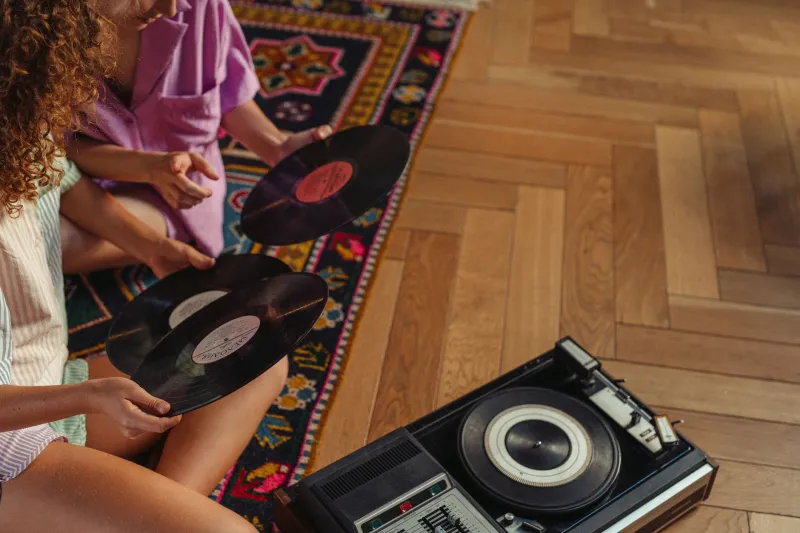
There's a specific kind of argument that doesn't exist anymore. The one where your college roommate puts on something you absolutely cannot stand — some band you find unbearable, some movie you think is pretentious garbage — and you're both stuck in the same space, negotiating the same reality. Maybe you come around. Maybe you don't. Maybe you spend twenty minutes explaining why they're wrong and end up understanding something about yourself in the process.
That argument is mostly gone now. And we've been so busy celebrating the convenience of getting exactly what we want that we haven't stopped to grieve what we traded away to get it.
The Feed That Learned to Love You Back
Personalization didn't announce itself as a cultural force. It crept in through the side door, dressed up as helpfulness. Spotify learned your moods. TikTok mapped your attention span down to the half-second. YouTube figured out that if it kept you in a lane, you'd stay longer. None of these platforms said, we're going to reshape how you understand taste and culture and disagreement. They just said: here's something you'll probably like.
And they were right, mostly. That's the uncomfortable part. The recommendations got good. Eerily, specifically good. So good that the idea of sitting through something that wasn't curated for you started to feel almost offensive — like being handed someone else's order at a restaurant.
But taste isn't supposed to be frictionless. It never was. The friction was the education.
What a Shared Cultural Moment Actually Did
Think about what it meant, before any of this, to have a genuinely shared cultural event. Not shared in the sense that everyone posted about it simultaneously. Shared in the sense that there was no algorithm sorting you into a comfortable corner away from people who felt differently.
When The Sopranos finale aired in 2007, the entire country sat in the same confusion together. When Michael Jackson died, or when Beyoncé dropped Lemonade with zero warning, or when a Super Bowl halftime show went sideways — these were moments that landed on everyone at once, regardless of whether the algorithm thought you were the target demographic. You had to reckon with the response of people who weren't like you. You had to hear from your aunt, your coworker, the guy at the bodega.
That cross-pollination was messy and sometimes exhausting. It was also how culture actually moved through a society. Ideas bumped into each other. Tastes collided. People changed their minds, or at least understood why someone else held a different one.
The Invisible Echo Chamber
Here's what makes the algorithmic echo chamber so much harder to resist than the old-fashioned kind: you don't know you're in it. The old echo chambers were obvious. You knew if you only watched one news channel or only read one kind of magazine. You could feel the walls.
The personalized feed has no visible walls. It just keeps opening into more rooms that look exactly like the last one, each one stocked with content that confirms what you already enjoy, already believe, already find aesthetically pleasing. There's no moment where it announces, you are no longer being challenged. It simply stops challenging you, and you stop noticing.
Over time, your taste calcifies around what the algorithm has decided you are. Your cultural identity — the music you love, the films you champion, the artists you follow — becomes less a product of genuine exploration and more a reflection of your engagement data. You didn't choose your taste so much as you trained a machine to replicate it back at you in increasingly refined loops.
And because everyone around you is inside their own loop, there are fewer collisions. Fewer arguments. Fewer moments where someone hands you something genuinely foreign and says: just try it.
We Stopped Disagreeing About the Good Stuff
The cultural disagreements that still happen online are largely not about aesthetics. They're about identity and politics and who gets to make what. Those fights are loud and real and important. But the quieter argument — the one about whether this album is actually as good as everyone says, or whether that film is overrated, or whether this writer is doing something genuinely new — that argument has gotten harder to have.
Partly because we're not all listening to the same album. Partly because the platforms that host the conversation are also the ones that sorted us away from people who might disagree. Partly because disagreeing about taste started to feel like a personal attack in a culture that conflates identity with consumption.
But taste is supposed to be argued. It's supposed to be tested. You're supposed to meet someone who thinks your favorite record is mediocre and either defend it with enough conviction that you understand why you love it, or listen hard enough to reconsider. That process — uncomfortable, occasionally humbling — is how you develop a genuine point of view rather than just a preference profile.
The Case for Getting Uncomfortable Again
None of this is an argument for abandoning streaming or deleting your apps. That's not a real solution and it's not a particularly interesting one. The infrastructure exists. We're inside it. The question is whether we can be intentional about creating the conditions for friction that the algorithm has quietly eliminated.
That might mean letting someone else control the music for a night without negotiating it to death. It might mean watching something a friend loves even though nothing about the description appeals to you. It might mean reading a piece of cultural criticism written by someone whose instincts are nothing like yours, and sitting with the discomfort of not immediately agreeing.
The parlor, historically, was where people gathered to argue about ideas. Where culture got passed around, debated, contested. Where your taste met someone else's taste and neither of you walked out exactly the same. The algorithm replaced that room with a very comfortable, very quiet one where everyone agrees with you all the time.
It's a nice room. But nothing interesting happens in it.