You Told the Internet First: The Strange Comfort of Confessing to Nobody in Particular
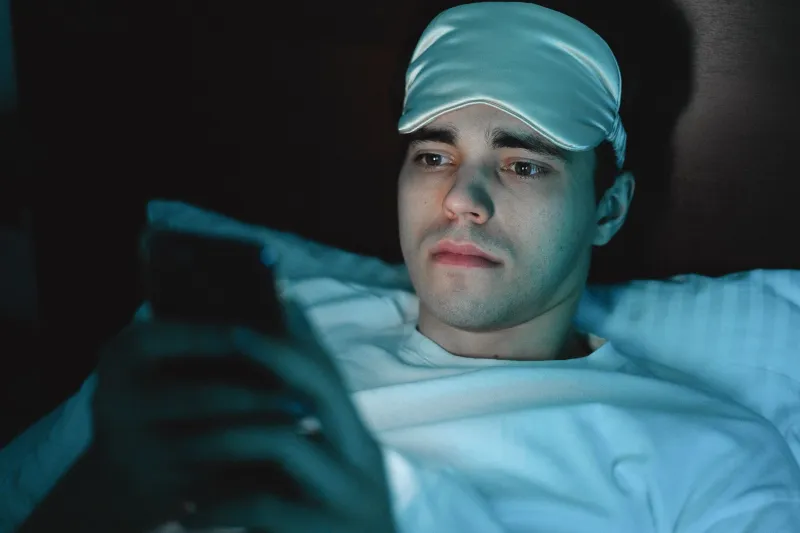
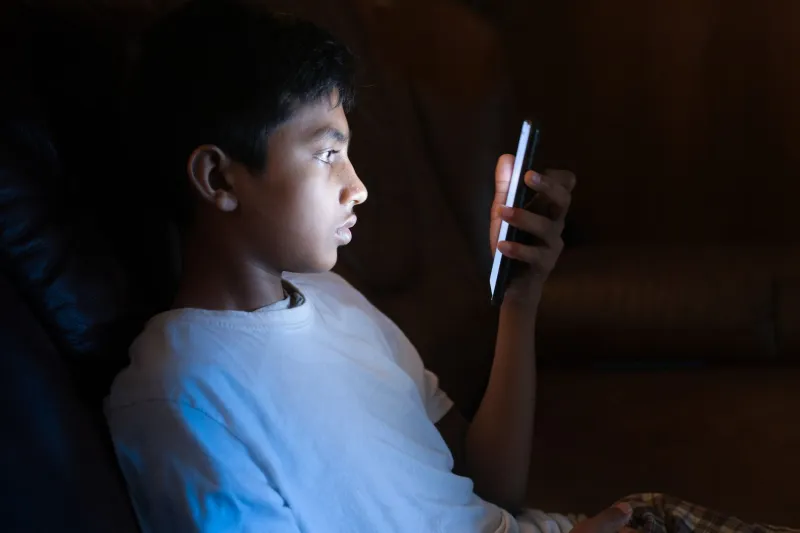
There's a specific kind of late-night scrolling that most of us know but rarely admit to. You're not looking for anything. You're just... moving through content that somehow keeps landing exactly where you are emotionally — the creator talking about her complicated relationship with her dad, the guy doing the dry-humored bit about never feeling like enough, the video essay about why high-achievers secretly believe they're frauds. And you think: how does it know?
The answer is both mundane and genuinely unsettling. It knows because you told it. Not in words, not in any single moment of confession, but in the cumulative language of your attention — what you paused on, what you rewatched, what you sent to yourself at 2 a.m. in the form of a saved post. The algorithm has been listening the whole time, building a portrait of your inner life that is, in some ways, more accurate than anything you've shared with the people who actually love you.
And here's the part that should probably bother us more than it does: most of us are fine with that.
The Confession Booth Got a Software Update
Human beings have always needed somewhere to put the uncomfortable stuff. Historically, that somewhere looked like a priest, a therapist, a best friend on a long drive, a journal hidden under a mattress. These were containers for the self — places where you could say the thing you hadn't said yet and figure out what you actually meant.
What's changed isn't the need. It's the container.
For a significant portion of Americans right now — particularly younger ones, but not exclusively — the first place the uncomfortable thing goes is into a search bar, a For You page, a comment section, or a parasocial relationship with a creator who has never once asked how you're doing. We outsource the listening to systems that cannot judge us, because judgment is exactly what we're afraid of.
And the algorithm, to its credit, is an excellent listener. It never interrupts. It never makes it about itself. It never says well, when I was your age or I just worry about you or have you tried journaling? It simply responds to what you give it with more of the same — a frictionless mirror that reflects your inner weather back at you in content form.
That's not nothing. That's actually something a lot of people have never had.
What We're Really Avoiding
Let's be honest about what's happening when we choose the stranger over the person who loves us. It's not that we don't trust our families or our friends. In most cases, it's almost the opposite — we trust them so much that their opinions actually matter, which makes them genuinely dangerous to our self-image in a way that a faceless algorithm simply isn't.
Telling your mother you're struggling with your sense of purpose at 29 is a real event with real stakes. She might worry. She might give advice you didn't ask for. She might love you so hard in the wrong direction that you end up comforting her about your own crisis. The vulnerability is mutual and messy and human, and sometimes that's too much.
Telling the internet? That's a controlled burn. You can be as honest as you want in a comment that nobody who knows you will ever read. You can DM a creator who will never respond and still feel, oddly, like you were heard. You can build an entire inner life in the space between your real relationships and your digital ones, and nobody has to know the ratio.
Psychologists have a term for the relationships we form with media figures who don't know we exist: parasocial. What they don't always talk about is how functional those relationships can be — not as replacements for real intimacy, but as practice for it. A safe place to rehearse the version of yourself that's still figuring out what it needs.
The Creator Economy as Accidental Therapist
There's an entire class of content creator whose primary product is essentially emotional permission. Watch enough of them and you start to notice the formula: here is a thing I felt that I wasn't supposed to feel, here is how I felt it anyway, here is you feeling it too now. The comment sections on these videos read like group therapy transcripts — thousands of people typing I've never heard anyone say this out loud in response to something that, statistically, millions of people have clearly been thinking.
This isn't cynical. It's actually kind of beautiful, in the way that all accidental community is beautiful. The creator didn't set out to become anyone's confessor. The viewer didn't set out to confess. And yet something real passes between them, even through a screen, even across the algorithmic distance.
But it's worth asking what gets lost in that transaction. Because the thing about confessing to someone who loves you — really loves you, with all the friction and history and inconvenient opinions that come with that — is that they push back. They know the parts of the story you're leaving out. They remember the version of you from three years ago and hold it up next to the version you're presenting now. That accountability is uncomfortable. It's also how people actually change.
The algorithm cannot do that. The parasocial relationship cannot do that. They can hold space, but they cannot hold you accountable, and there's a difference.
The Loneliness Underneath
None of this is really about technology. It's about the specific shape of loneliness that defines this particular American moment — the kind where you are, by most metrics, more connected than any human beings in history, and also somehow more alone than you know how to explain.
We are surrounded by content that understands us. We are surrounded by communities built around our exact interests and anxieties. We have access to more mirrors than any generation before us. And yet the kitchen table conversation — the one where you say the real thing to the person who has known you your whole life and has to live with the answer — feels harder than ever.
Maybe what the algorithm confessional is really telling us is not that we've given up on human intimacy. Maybe it's that we're starving for it so badly that we'll take any version we can find — even the one that's technically a recommendation engine, even the one that doesn't know our name, even the one that will, without sentiment, show us something completely different tomorrow.
The hunger is the same. We just got weird about feeding it.
And somewhere, your mother is probably wondering why you seem distant lately. She doesn't know you've been telling the internet everything. She doesn't know the internet has been surprisingly good about it.
She'd probably have a lot of feelings about that. Which is exactly why you haven't told her.