Sorry for Your Loss: The Influencer Apology Has Become Its Own Genre
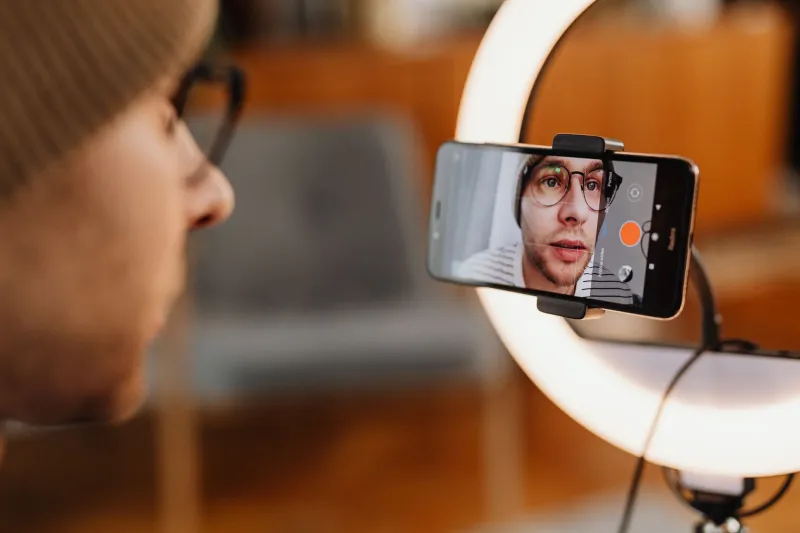
Somewhere between the ring light and the carefully chosen neutral backdrop, something happened to the public apology. It stopped being a moment of reckoning and became a content category. You know the format by heart now: no music, minimal editing, slightly red eyes that may or may not be real, a voice that breaks at just the right moment. The title is usually some variation of We Need to Talk or I Owe You This. The thumbnail is a face caught mid-expression — not quite crying, not quite composed.
You click it. Of course you do. We all do.
The Architecture of Contrition
There's a reason these videos follow such a recognizable script, and it isn't because every influencer happened to arrive at the same emotional truth independently. The apology video has been A/B tested into near-perfection. Audiences have rewarded certain behaviors — the long pause before speaking, the acknowledgment of specific callouts, the pivot toward growth — and punished others. Too polished and you seem unremorseful. Too chaotic and you seem unhinged. The sweet spot is a kind of managed vulnerability that reads as authentic without actually being uncontrolled.
This is not an accident. It is craft. And the fact that it's craft doesn't necessarily make it dishonest — but it does make it performance, which complicates the whole enterprise considerably.
What we're watching, whether we admit it or not, is a highly produced piece of content designed to manage a brand crisis. The emotional labor is real. The stakes for the person making it are real. But the format itself has been so thoroughly colonized by strategy that sincerity and simulation have become genuinely difficult to separate. Your gut reaction to the video — they mean it or they're faking — probably says more about how you felt about that person going in than it does about anything happening on screen.
Why We Can't Look Away
Here's the uncomfortable part: we are not watching these videos because we care about justice. Not primarily, anyway. We're watching because they're interesting. There is genuine drama in watching someone navigate public shame, the same low-frequency thrill that makes courtroom dramas and confessional podcasts compelling. We are wired for this. Humans have always gathered to witness the fall and the attempted return.
What's changed is the medium. The town square has been replaced by a comment section, and the ritual has been monetized. Views are views. Controversy drives traffic. An influencer who releases a well-received apology video often gains subscribers in the aftermath — a counterintuitive but thoroughly documented phenomenon that the internet has simply accepted as normal. Accountability, it turns out, can be good for business.
That's not cynicism. That's just the economics of attention.
The Audience's Role in All of This
We tend to position ourselves as passive observers of this theater — the discerning public, weighing evidence, rendering verdicts. But we are not passive. We are participants. The audience's appetite for the apology video created the market for it. Our collective willingness to grant or withhold forgiveness based on a six-minute YouTube upload is what made the format worth producing in the first place.
And the verdicts we render are rarely about the actual harm done. They're about the performance of remorse. Did they say the right things? Did they name the behavior specifically enough? Did they cry? Did they cry too much? The comment sections of these videos function as real-time critique forums where the quality of the apology is evaluated with the same energy people bring to film reviews. Good pacing but the ending felt rushed. Needed to address the 2019 incident more directly. Overall, I'm willing to move on.
This is not accountability culture. This is accountability content.
What Gets Lost in the Ritual
The people actually harmed by whatever precipitated the apology are rarely centered in any of this. They exist in the narrative as the catalyst — the reason the video had to be made — but the conversation almost immediately becomes about the influencer's journey. Will they recover? Will the fanbase forgive them? Are they growing? The injury itself becomes background noise to the redemption arc.
This isn't unique to the internet. Celebrity culture has always done this. But the speed and scale of the cycle has compressed to the point where someone can be canceled, apologize, and have their comeback arc written within a single news cycle. There's something almost sportive about it — the rise, the fall, the return — and we consume it with the same detached investment we bring to reality television.
The Part Where We Ask Ourselves the Hard Question
If you've watched one of these videos recently — and you have, even if you're already composing your objection — it's worth sitting with the question of what you were actually looking for. Proof of guilt? Evidence of innocence? The specific combination of words that would let you feel okay about continuing to follow someone whose content you enjoy?
None of those are inherently bad motivations. But they're worth naming honestly, because the alternative is pretending we're engaged in some kind of civic exercise when we're mostly just watching a show.
The influencer apology video is a genuinely fascinating cultural artifact. It reveals our collective anxieties about accountability, authenticity, and the strange parasocial contracts we form with people we've never met. It tells us something real about how forgiveness works — or doesn't — in a public context where everyone has an opinion and nobody has full information.
It is also, undeniably, entertainment. The two things can be true at once. They probably have to be.